Congo Investment Group prepares, structures, and positions frontier market projects for institutional investment. We work where capital is scarce and opportunity is real.
Multiple projects under preparation & institutional evaluation.
PIPELINE
12
ACTIVE DEALS
4
FOCUS REGIONS
The Problem We Solve
The gap between opportunity and capital.
Frontier markets are full of viable projects. The problem is rarely the opportunity itself.
Projects stall because the preparation work hasn't been done to the standard institutional investors require: governance, structuring, risk documentation.
That is the gap Congo Investment Group was built to fill.
01
The opportunity exists
Strong projects, real demand, clear economic rationale. The opportunity is not the issue.
02
But the preparation is missing
Governance gaps, incomplete documentation, and unstructured risk are what stop institutional capital from committing.
03
CIG bridges that gap
We work with project sponsors before capital is sought, building the institutional foundation that makes financing possible.
What CIG Does
What we actually do.
PILLAR 01
Investment Preparation
We help project sponsors get their house in order before approaching institutional investors. That means governance frameworks, compliance documentation, risk structuring, and execution readiness.
PILLAR 02
Strategic Advisory
We advise companies and partners on how to navigate frontier markets, from risk structuring to working with governments and development finance institutions.
PILLAR 03
Market Intelligence
Research and analysis supporting informed investment decisions. Powered by EntryIQ™ — CIG's proprietary intelligence platform delivering live deal flow, AI synthesis, risk signals, and CIRS™ scoring across frontier market regions.
Focus Areas
Where we focus.
CRITICAL MINERALS
Critical Minerals
The DRC and the Central African Copperbelt hold some of the world's most significant deposits of cobalt, copper, and lithium. Demand is growing fast as the energy transition accelerates. CIG focuses on mining and processing projects that can be structured to meet the governance and ESG standards institutional investors require.
PRIMARY: DRC · CENTRAL AFRICAN COPPERBELT
ENERGY INFRASTRUCTURE
Energy Infrastructure
Energy deficits are one of the biggest constraints on economic development across our focus markets. We work on power generation, transmission, and distribution projects, particularly those with a credible offtaker: a state utility, an industrial anchor, or a government-backed framework.
SOLAR · LNG · HYDRO · GRID INFRASTRUCTURE
STRATEGIC INDUSTRIAL
Strategic Industrial Projects
Processing facilities, logistics hubs, and transport infrastructure are the backbone of a functioning economy. CIG engages with industrial projects that have clear strategic rationale and the kind of execution complexity that benefits from rigorous pre-investment structuring.
LOGISTICS · PROCESSING · TRANSPORT NETWORKS
PRIMARY
Democratic Republic of Congo
The DRC is where CIG has its deepest roots. It is the world's largest cobalt producer, holds major copper deposits, and has enormous untapped hydropower potential. Our team operates on the ground in Kinshasa and Lubumbashi.
KINSHASA · LUBUMBASHI · KATANGA
SECONDARY
Central African Copperbelt & Beyond
The Copperbelt extends beyond the DRC into Zambia and beyond. Beyond minerals, our methodology applies across Southeast Asia, MENA, and Latin America, wherever strong projects need institutional preparation to unlock capital.
SSA · SEA · MENA · LATAM
CRITICAL MINERALS · DRC & CENTRAL AFRICAN COPPERBELT
Where the world's energy transition is decided underground.
The DRC holds some of the world's largest deposits of cobalt, copper, and lithium. CIG structures the projects that connect these resources to institutional capital — on terms that hold.
ENERGY INFRASTRUCTURE · SOLAR · LNG · HYDRO · GRID
Powering growth where the grid has never reached.
Energy deficits are one of the biggest constraints on frontier market development. CIG structures power generation, transmission, and distribution projects anchored by credible offtakers and institutional-grade governance.
AGRIBUSINESS & STRATEGIC LAND USE
Frontier land. Institutional scale.
Sub-Saharan Africa holds over 60% of the world's uncultivated arable land. CIG identifies and structures agribusiness and agro-industrial projects that meet the governance, ESG, and execution standards required by long-term institutional capital.
Intelligence Platform
EntryIQ™
CIG's proprietary frontier markets intelligence platform, combining live deal flow, AI-powered synthesis, and CIRS™ scoring into a single institutional interface.
Vietnam FDI framework creates immediate windows. DRC copper: 60-90 day entry window ahead of code amendments.
Work With CIG
Ready to work with CIG?
We work with a small number of partners at a time. If you are a project sponsor, institutional investor, or strategic partner with a serious frontier market mandate, we want to hear from you.
Congo Investment Group is a U.S.-based firm that prepares, structures, and advises on investments in frontier markets. We work where capital is needed most and institutional infrastructure is weakest.
Who We Are
About CIG
Congo Investment Group is a U.S.-based firm focused on frontier market investment preparation and strategic advisory. In select cases, we also participate as a principal co-investor alongside aligned partners.
We work before the financing conversation begins, helping project sponsors meet the governance, compliance, and execution standards that DFIs and institutional investors require.
Founded in 2019, CIG was built around a simple observation: most frontier market projects fail not because the opportunity isn't real, but because the institutional preparation isn't done.
Boston: Boston, MA
United States
Kinshasa, Democratic Republic of Congo
Representations: Lubumbashi · New York City
Why We Exist
Why CIG exists
There is no shortage of capital looking for frontier market exposure. And there is no shortage of viable projects. The problem is the space between them: weak governance, incomplete documentation, and projects that haven't been structured to institutional standards.
CIG works in that space. We believe the most important work happens before capital is deployed, when there is still time to get the fundamentals right.
🌍
SSA
Sub-Saharan Africa
🌏
SEA
Southeast Asia
🌐
MENA
MENA
🌎
LATAM
Latin America
How We Operate
How we work
◈
Institutional Readiness
Governance and compliance alignment designed to improve project quality, clarify risk, and enable disciplined institutional engagement.
◉
Risk Architecture
Risk identification, allocation, and mitigation strategies. Our objective is not to eliminate risk, but to make it explicit, structured, and intelligible to long-term capital providers.
◎
Public-Private Interface
Structuring the interface between public mandates, regulatory frameworks, and private institutional capital requirements.
Nathan Tshintu leads Congo Investment Group and is responsible for the firm's strategy, advisory mandate, and institutional engagement. His work focuses on investment preparation, project structuring, governance frameworks, and compliance alignment for emerging-market projects. Through his initiative, EntryIQ™ and the CIRS™ framework were developed to build institutional-grade intelligence infrastructure for frontier market investing.
CHAIRMAN · CIG–PLURAL INDUSTRY HOLDING GROUP PARTNERSHIP
Simon Littlewood
STRATEGIC OVERSIGHT & GOVERNANCE
Senior capital-markets and investment professional with over 40 years of experience across global finance and structured investments in developed and emerging markets. UK-qualified Chartered Accountant and Oxford law graduate. Provides senior strategic oversight and governance support on select CIG engagements.
IN THE FIELD
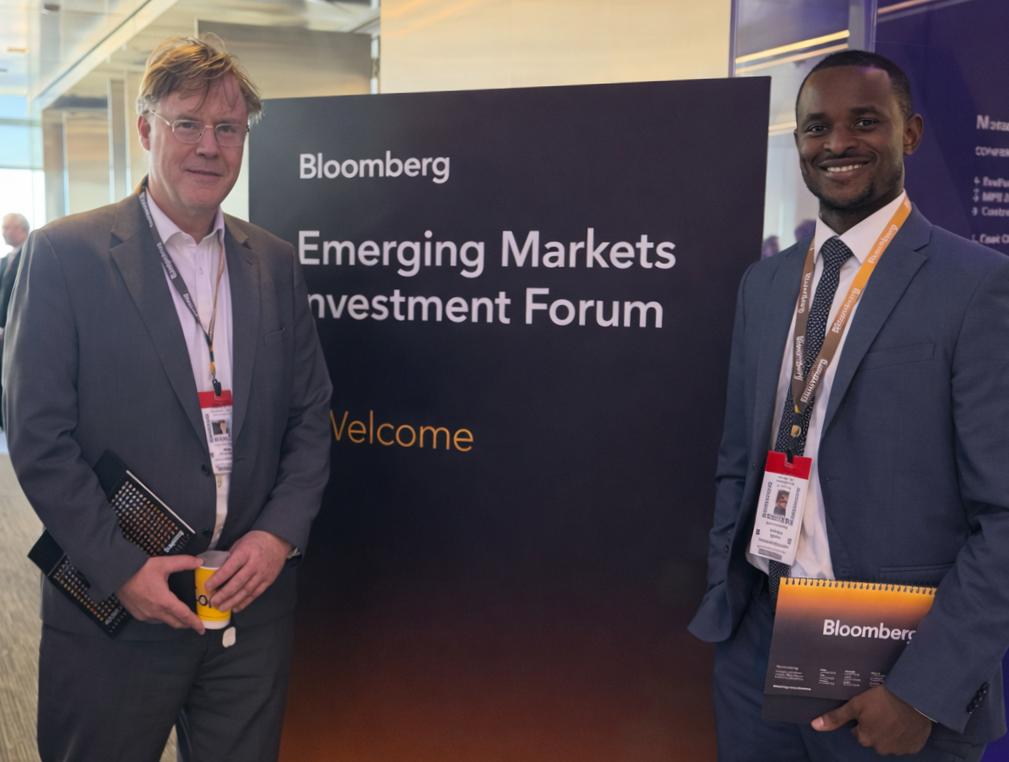
BLOOMBERG EMERGING MARKETS INVESTMENT FORUM
Principal Nathan Tshintu and CIG–PIHG Chairman Simon Littlewood engaging with global investors on institutional opportunities across the Congo and broader frontier markets.
NATIONAL PRESS CLUB · WASHINGTON, D.C.
Investment meeting between U.S. investors and the leadership of Lualaba Province, including Governor Fifi Masuka — one of the DRC's most resource-rich provinces and a primary focus of CIG's critical minerals mandate.
The People Behind CIG
Our Team.
CIG is built on people with real experience in frontier markets, investment structuring, and institutional finance. Here is who we are.
Leadership
Senior Leadership
NT
PRINCIPAL
Nathan Tshintu
CONGO INVESTMENT GROUP
Leads CIG's strategy, advisory mandate, and institutional engagement. Holds a Master's in International Business with a concentration in Finance. Focuses on investment preparation, project structuring, governance frameworks, and compliance alignment. Developer of the CIRS™ framework and EntryIQ™ intelligence platform.
SL
CHAIRMAN · CIG–PIHG PARTNERSHIP
Simon Littlewood
STRATEGIC OVERSIGHT & GOVERNANCE
Senior capital-markets professional with 40+ years of experience. Oxford law graduate and UK Chartered Accountant. Provides senior strategic oversight and governance support on select engagements.
Principals & Advisors
Senior Advisors
RC
Randall Clark
SENIOR ADVISOR
Senior principal engagement and investment oversight.
DF
Don Francis
LP & ADVISOR
LP relations and strategic advisory support.
SW
Sandra Walsh
PORTFOLIO ADVISOR
Portfolio management and investor advisory.
CZ
Christina Zandi
EQUITY ADVISOR
Equity structuring and capital strategy.
AJ
Ashley Jones
TECH LEAD ADVISOR
Technology strategy and platform advisory.
LR
Lisa Rose
PRODUCT MANAGER
Product development and platform management.
ES
Edward Steward
COMPLIANCE & SYSTEMS
Compliance frameworks and systems oversight.
Deal Origination
Deal Origination Team
DT
David Thanga
DEAL ORIGINATION ANALYST
SB
Staline Banza
DEAL ORIGINATION ANALYST
AK
Abraham Kapeta
DEAL ORIGINATION ANALYST
MM
Michee Musingatalu
DEAL ORIGINATION ANALYST
HK
Haggai Kalonda
DEAL ORIGINATION ANALYST
EK
Elie Kapinga
DEAL ORIGINATION ANALYST
KO
Kalonda Ornan
MEDIA & INVESTMENT ASSOCIATE
SR
Sangara Raoul
LEAD ANALYST, MARKETING
MK
Marvin Salomon Kalembe
FIELD OPERATIONS LIAISON
MB
Moise Bashonga
COMPLIANCE ANALYST
We bring together finance, legal, technical, and policy expertise. Depending on the engagement, we assemble the right team rather than a fixed one.
A collaborative, research-driven culture where rigorous thinking and frontier market expertise come together.
Project Engagement
Working with CIG
We engage with project sponsors and institutional partners who are serious about getting frontier market investments across the line.
Intended Audience
Is this for you?
This is for project sponsors who need help structuring and positioning their initiative for institutional capital, and for institutional partners such as DFIs, public agencies, and long-term investors who want to understand what CIG works on.
CIG is an advisory firm. We do not raise capital, manage assets, or act as a broker. Every engagement is defined by a written mandate.
SECTORS OF INTEREST
Energy and power infrastructure
Transportation and logistics infrastructure
Strategic and critical resources
Climate-aligned and transition-related assets
Evaluation Criteria
What we look for
We look for projects where the real bottleneck is preparation, not capital. If a project simply needs financing, we are probably not the right partner. If it needs to be properly structured first, we can help.
◈
Scale & Complexity
Meaningful development, infrastructure, or strategic relevance with clear execution requirements.
◉
Governance Needs
Sponsors seeking governance, risk, and institutional structuring support to reach capital readiness.
◎
ESG Alignment
Alignment with compliance, ESG, and long-term execution principles required by institutional capital.
▣
Early Stage
CIG engages at conceptual, pre-feasibility, or early feasibility stages. Not late-stage placement.
Screening Process
Our engagement process.
1
Tell us about your project
Send us a brief overview of what it is, where it is, what stage you are at, and what you are trying to achieve.
2
We take a look
We assess whether there is a fit. This is not a formal process. We are simply deciding whether it makes sense to go further.
3
We go deeper
If there is potential alignment, we put a confidentiality agreement in place and have a proper conversation.
4
We formalize the work
If we agree to work together, we define the scope, timeline, and deliverables in writing before anything starts.
For Institutional Partners
Institutional partners engage with CIG to access institution-ready project pipelines under preparation, collaborate on upstream risk and governance frameworks, and align public and private capital engagement strategies. Such collaboration does not imply endorsement or commitment unless explicitly stated in writing.
If you are a project sponsor or institutional partner seeking disciplined, compliance-first advisory engagement, submit a preliminary inquiry.
Contextual Institutional Readiness Score. CIG's 100-point governance and capital-alignment framework for frontier market enterprises and investment opportunities.
Why CIRS Exists
Why most projects never get funded.
Many frontier market projects are commercially sound. They have real revenue, real contracts, real operations. But when institutional investors look closely, structural problems emerge.
Institutional investors and DFIs look at governance, financial reporting, compliance documentation, and risk management. Most frontier market companies were simply never set up with these requirements in mind.
CIRS translates those institutional requirements into a concrete scoring framework. It tells a sponsor exactly where they stand and what needs to change.
Core Principle
"CIRS does not guarantee capital deployment. It evaluates structural readiness for institutional scrutiny."
— Congo Investment Group, CIRS Methodology v1.1
100
POINT ASSESSMENT FRAMEWORK
5
DIMENSIONS
4
TIERS
12mo
VALIDITY
Assessment Dimensions
Five core dimensions of institutional readiness.
DIMENSION 01
Governance & Control
Assessment of shareholding clarity, oversight structures, decision-making authority mapping, and internal policy documentation.
DIMENSION 02
Financial Integrity
Evaluation of financial record quality, reporting cadence, cash flow transparency, and exposure to revenue concentration risk.
DIMENSION 03
Legal & Regulatory Compliance
Review of corporate registration, tax standing, workforce documentation, licensing requirements, and contract enforceability.
DIMENSION 04
Operational Structure
Evaluation of documented operating procedures, management hierarchy clarity, key-person dependency risks, and business continuity planning.
DIMENSION 05
Capital Strategy
Assessment of capital planning discipline, growth roadmap structure, unit economics clarity, and risk-adjusted expansion strategy.
100
TOTAL POINTS
Score Tiers
Certification classifications.
80 — 100
Tier I — Institutional Ready
Structured governance frameworks, financial discipline, and manageable operational risk. Suitable for institutional capital engagement.
70 — 79
Tier II — Conditionally Ready
Strong operational capacity requiring targeted improvements in governance or reporting frameworks before full institutional engagement.
60 — 69
Upgrade Required
Requiring structured governance improvements before institutional readiness can be established. Structured advisory pathway available.
Below 60
Structurally Not Ready
Substantial structural reform required prior to institutional engagement. Material risk indicators present.
Governance & Oversight
Framework Integrity
Certification decisions under CIRS are made by the Standards and Institutional Review Council, known as the SIRC.
Council reviews documented assessment results and evaluates structural risk classifications
Certification decisions are structurally separated from advisory engagement and investment considerations
No single executive may unilaterally issue certification
Certification remains valid for 12 months and may be revoked for material governance deterioration
Pilot Implementation
Proven in the Field
CIRS Version 1.0 was initially piloted with a cohort of revenue-generating Congolese-owned enterprises operating within the mining services sector in the DRC.
The pilot identified common structural gaps including informal governance practices, inconsistent financial reporting, and high client concentration risk. Following structured governance upgrades, participating enterprises demonstrated measurable improvements in documentation discipline and institutional readiness.
The SIRC serves as the independent governance body responsible for maintaining the integrity, rigor, and institutional credibility of the CIG Institutional Readiness Standard™. The Council provides independent oversight of the evaluation and certification process, ensuring that readiness assessments are conducted according to structured criteria and documented evidence.
Role & Responsibilities
Core Functions
CERTIFICATION REVIEW
All enterprises undergoing evaluation under the CIRS framework are subject to final review by SIRC prior to certification issuance.
STANDARDS INTEGRITY
The Council ensures that the assessment methodology, scoring model, and evaluation procedures remain consistent with institutional governance and capital-readiness principles.
FRAMEWORK DEVELOPMENT
SIRC periodically reviews the CIRS framework to ensure alignment with evolving expectations within institutional capital markets and global supply chains.
RISK OVERSIGHT
The Council evaluates structural risk factors identified during enterprise assessments, including governance concentration, compliance exposure, financial reporting gaps, and operational dependency risks.
Certification Authority
Independent Determination
Enterprises do not self-certify under the CIRS framework. Certification determinations are issued only following:
Completion of the enterprise readiness assessment
Documentation review and validation
Structured evaluation under the five-pillar scoring model
Final review by the Standards & Institutional Review Council
This process ensures that certification reflects independent evaluation rather than self-reported compliance.
Operating Principles
Governance Principles
01 · INDEPENDENCE
Certification decisions are not issued by individual advisors or operational staff.
02 · EVIDENCE-BASED
Assessments rely on documented enterprise information and structured evaluation criteria, not self-reported compliance.
03 · INSTITUTIONAL ALIGNMENT
The framework reflects governance, financial discipline, and risk transparency principles expected by institutional capital providers.
04 · FRAMEWORK INTEGRITY
The Council maintains oversight to ensure that certification remains rigorous, selective, and credible.
Framework Evolution
As the CIRS framework evolves, SIRC contributes to the development of updated framework versions and sector-specific technical annexes. These may include expanded evaluation criteria across:
Strategic minerals and mining services
Energy and infrastructure
Agriculture and industrial supply chains
Framework updates are periodically reflected in new versions of the CIRS standard.
Position Within CIRS
The Standards & Institutional Review Council operates within the governance architecture of the CIG Institutional Readiness Standard™ and functions as the final review body responsible for certification oversight.
The Council's role is to preserve the institutional rigor of the framework while supporting the structured evaluation of enterprises preparing to engage with institutional capital.
The frontier markets intelligence platform developed by Congo Investment Group, combining live deal flow, AI synthesis, CIRS™ scoring, and real-time risk signals in one institutional interface.
Platform Overview
The intelligence layer frontier markets needed.
EntryIQ brings together real-time FX data, GDP forecasts, AI-powered market synthesis, live deal pipeline, risk signals, and CIRS™ scoring into a single institutional-grade interface.
Vietnam's accelerated FDI framework and Egypt's IMF-backed stabilization create immediate deployment windows. DRC copper: 60-90 day entry window ahead of mining code amendments.
Platform Features
Six features. One platform.
01 · LIVE DATA
Market Overview
Real-time FX across 9 frontier markets. GDP forecasts for SSA, SEA, MENA, and LATAM. Live commodity pricing for cobalt, copper, and lithium.
02 · CLAUDE AI
AI Intelligence Engine
Click Generate for real-time frontier market synthesis: where to deploy capital, which risks require immediate attention, and which entry windows are narrowing.
03 · $2.6B LIVE
Deal Pipeline
Direct access to CIG's active investment opportunities with full financials, deal structure, investment thesis, and CIRS™ score per deal.
04 · 10 SIGNALS
Risk Signal Engine
Political, FX, regulatory, and operational risks rated Critical, High, Moderate, or Improving, each with a specific recommended investor action.
05 · PROPRIETARY
CIRS™ Scoring
CIG's 100-point Contextual Institutional Readiness Score evaluating projects across Governance, Bankability, Risk, and Impact dimensions.
06 · CIG ANALYSTS
Intelligence Feed
CIG analyst notes and AI-generated market briefs updated regularly. Submit Project tab for CIRS™ assessment applications.
University Access
Free access for students.
CIG offers 6-month free access to EntryIQ for students at partner institutions. Currently partnered with Hult International Business School and University of Maryland Baltimore County.
A confidential document portal for approved Limited Partners, providing secure access to full deal documents, financial models, CIRS reports, and co-investment opportunity alerts.
What's Inside
Everything an LP needs.
The CIG Deal Room provides vetted Limited Partners with secure, watermarked access to the complete information package for each active investment opportunity.
Full deal documents and term sheets: complete legal and commercial documentation
Financial models and projections: IRR analysis, sensitivity tables, returns modeling
CIRS™ assessment reports: full 100-point institutional readiness evaluation
Co-investment opportunity alerts: real-time notifications when windows open
Full audit trail: every document view and download logged and tracked
Watermarked documents: all materials carry LP identity for security
Access Requirements
Vetted LPs Only
Access to the CIG Deal Room is by CIG approval only. There is no self-signup. Each LP is manually vetted and approved by CIG before credentials are issued.
Minimum commitment: $1M per deal or $5M across portfolio
No self-signup. CIG manually vets and approves every LP before credentials are issued.
📋
NDA Required
All LPs must execute a Non-Disclosure Agreement before accessing any deal materials.
🔏
Watermarked Documents
Every document carries the LP's name and email. Unauthorized distribution is traceable.
📊
Full Audit Trail
Complete log of every login, document view, and download, visible to CIG in real time.
Human Capital Investment
Education Access Grant
Congo Investment Group believes that access to education is one of the most direct investments in long-term economic development. The Education Access Grant is our contribution to that.
About the Grant
CIG Education Access Grant
The grant is a merit-based program that helps high-potential students in priority markets access the academic materials they need to succeed.
We started with a pilot in the Democratic Republic of Congo. A U.S. track is in development.
The grant does not cover tuition, housing, meals, or personal expenses.
APPLICATIONS OPEN
Congo Track
DEMOCRATIC REPUBLIC OF CONGO · PILOT PHASE
The Congo Track is the pilot phase focusing on addressing immediate academic material constraints faced by high-potential students in the DRC. One academic year, renewable based on academic performance.
Will focus on removing non-tuition barriers such as academic materials, certification costs, and professional readiness support. Details regarding eligibility and partnerships will be announced.
EDUCATION ACCESS GRANT
Investing in the minds that will shape frontier economies.
The CIG Education Access Grant removes one barrier at a time — starting with academic materials — so that high-potential students across the DRC and beyond are not held back by what they cannot yet afford.
Eligibility & Selection
Who Should Apply
ELIGIBILITY REQUIREMENTS
Enrolled in or admitted to a recognized higher-education institution
Demonstrate academic merit (grades, transcripts, or admission letter)
Demonstrate financial need limiting access to academic materials
Agree to reporting and verification requirements
Maintain a minimum 70% grade / 2.8 GPA
SELECTION CRITERIA
Academic performance and motivation
Financial constraints related to academic materials
Clarity of academic goals and long-term contribution
Integrity and completeness of application
Preference may be given to students in fields aligned with long-term economic development such as STEM, economics, public policy, and education.
EntryIQ University Access
CIG also offers 6-month free access to EntryIQ for students at partner institutions, currently Hult International Business School and UMBC.
CIG is a small, focused team working on real transactions in some of the world's most interesting markets. If that sounds like the right environment for you, read on.
Open Positions
Current Opportunities
POST 082323FULL-TIMEPOSTED 09/23/2025
Deal Origination Analyst
Support CIG's deal origination pipeline across frontier markets. Conduct market research, screen opportunities, prepare investment memoranda, and support due diligence processes for energy, infrastructure, and minerals transactions.
Research & Feasibility Lead — Industrial Power & Mining Infrastructure
Lead feasibility research and technical analysis for industrial power and mining infrastructure projects. Support CIG's CIRS assessment pipeline with sector-specific expertise and institutional reporting.
You work on live transactions, not case studies. Sub-Saharan Africa, Southeast Asia, MENA, Latin America: real projects, real sponsors, real stakes.
◉
Serious standards
We hold ourselves to institutional standards. That means rigorous documentation, honest risk assessment, and frameworks that actually hold up under scrutiny.
◎
On-the-ground work
This is not remote desktop work. Our team operates on the ground in Kinshasa, Lubumbashi, and across our focus regions.
Insights & Analysis
CIG Intelligence Blog
Research, analysis, and institutional perspectives on frontier market investment, governance, and economic development.
Congo Investment Group Advances Active Mandates in the DRC
Congo Investment Group (CIG), a U.S.-based institutional investment and advisory platform focused on frontier markets, is currently advancing a series of active mandates across the Democratic Republic of the Congo's mining and energy value chain. As part of its institutional preparation model, CIG is engaged with Congolese-owned operating companies — including ZAR Africa and Entreprise Générale des Fabrications et des Constructions Optimales (EGEFCO) — supporting governance alignment, capital structuring, and operational positioning in line with international investment standards.
These mandates illustrate CIG's integrated model: combining local execution capabilities with international expertise to advance bankable, execution-ready opportunities in one of the world's most strategically significant resource markets.
Whether you are an investor, a project sponsor, a potential partner, or just exploring, get in touch. We respond to every serious inquiry.
LP Inquiry
Investing with CIG
We work with family offices, development finance institutions, impact funds, and institutional investors who have a genuine frontier market mandate and a long-term view.
Congo Investment Group is committed to integrity, transparency, and accountability in all engagements. The following policies govern CIG's operations and your use of this website.
Congo Investment Group ('CIG') is committed to protecting the privacy and confidentiality of individuals and organizations that interact with us. We may collect contact information, professional and institutional information voluntarily provided, website usage data, and communications submitted through our website or email. We do not knowingly collect sensitive personal data unless voluntarily provided for a specific professional purpose. Information is used to respond to inquiries, conduct advisory engagements, improve website functionality, and comply with legal obligations. CIG does not sell or rent personal data. We maintain reasonable administrative, technical, and organizational safeguards to protect information against unauthorized access, disclosure, or misuse.
02
Terms of Use
This website is provided for informational purposes only. Content on this website does not constitute investment advice, legal advice, tax advice, or an offer or solicitation of securities or financial products. All content, trademarks, and materials on this website are the property of Congo Investment Group unless otherwise stated. Unauthorized use is prohibited. CIG is not liable for any direct or indirect losses arising from the use of this website or reliance on its content. These Terms are governed by the laws of the United States.
03
Code of Ethics & Professional Conduct
CIG is committed to integrity, professionalism, and accountability in all engagements. We adhere to the following principles: acting with honesty and transparency, avoiding misrepresentation or conflicts of interest, respecting confidentiality and proprietary information, and complying with applicable laws and regulations. CIG personnel are expected to exercise independent judgment, maintain objectivity, and act in the best interest of engagement objectives as defined contractually. Zero tolerance for bribery, corruption, fraud, or unethical conduct in any form.
04
Conflicts of Interest Policy
CIG seeks to identify and manage actual or potential conflicts of interest. Conflicts may arise from advisory engagements involving overlapping stakeholders, personal or professional relationships, or external affiliations. Where conflicts arise, CIG will disclose the conflict promptly, implement internal safeguards, and decline or terminate engagements where conflicts cannot be reasonably managed. CIG does not accept compensation contingent on investment placement or capital raising outcomes.
05
Anti-Corruption & Anti-Bribery Policy
CIG maintains a zero-tolerance policy toward bribery and corruption in any form. This policy applies to all CIG personnel, contractors, and representatives. CIG prohibits offering or accepting bribes or improper payments, facilitation payments, and improper gifts, favors, or inducements. CIG conducts its activities in accordance with applicable U.S. laws, including the Foreign Corrupt Practices Act (FCPA), and relevant international standards.
06
AML & Sanctions Policy
CIG is committed to preventing money laundering, terrorist financing, and sanctions violations. As an advisory platform that does not handle client funds, CIG applies a proportionate, risk-based AML approach including counterparty due diligence, sanctions screening where appropriate, and refusal to engage in activities that raise material AML or sanctions concerns. CIG aligns its practices with applicable U.S. sanctions regimes and international AML principles.
07
ESG Policy
CIG integrates ESG considerations into its advisory and project preparation activities where relevant. ESG focus areas include environmental impact awareness and sustainability alignment, respect for labor standards and human rights, and governance, transparency, and institutional integrity. CIG does not certify or guarantee ESG outcomes. ESG considerations are advisory and dependent on project sponsors and counterparties.
08
Information Security Policy
CIG treats all non-public information received during engagements as confidential. Information is accessed only by authorized personnel and retained only as necessary for business and compliance purposes. CIG maintains procedures to respond promptly to suspected data breaches or security incidents.
09
Complaints & Whistleblower Policy
Concerns regarding unethical behavior, misconduct, or policy violations may be reported confidentially to CIG. CIG prohibits retaliation against individuals who raise concerns in good faith. All reports are treated with discretion and investigated promptly.
10
Policy Review & Updates
These policies are reviewed periodically and may be updated to reflect changes in law, regulation, or business operations. Continued use of this website constitutes acceptance of updated policies. Last reviewed: 2026. Contact: intel@congoinvestmentgroup.com
Legal Notice
Regulatory Disclaimer
Please read this disclaimer carefully before using this website or engaging with Congo Investment Group.
REGULATORY STATUS
Congo Investment Group ("CIG") is a U.S.-based investment preparation and strategic advisory platform. CIG does not operate as a broker-dealer, investment adviser, commodity trading adviser, or asset manager, and does not solicit, arrange, or execute securities transactions.
The information contained on this website is provided for general informational purposes only and does not constitute investment advice, legal advice, tax advice, or an offer, solicitation, or recommendation to buy or sell any security, financial instrument, or investment product.
CIG does not hold or manage client funds, does not accept discretionary authority over assets, and does not act as a placement agent or intermediary in connection with capital raising activities. Any references to projects, initiatives, or opportunities are illustrative and do not imply the availability of investment, capital commitment, or participation.
Engagements with CIG are advisory in nature and are governed by written agreements defining scope, responsibilities, and limitations. Outcomes are dependent on numerous factors outside CIG's control, including regulatory approvals, market conditions, counterparties, and execution by third parties. No assurance is given that any advisory engagement will result in financing, investment, or project implementation.
CIG may collaborate with governments, development finance institutions, technical partners, and private-sector stakeholders; however, such collaboration does not imply endorsement, sponsorship, or approval by any public or private institution unless explicitly stated in writing.
Forward-looking statements, opinions, and analyses expressed herein are based on information believed to be reliable at the time of publication but are subject to change without notice. CIG makes no representation or warranty as to the accuracy or completeness of any information provided.
This website and its contents are intended for professional and institutional audiences. By accessing this website, you acknowledge and agree to these terms.
These are not aspirational values. They describe how CIG actually operates.
◈
Transparency
We tell partners what we know, what we do not know, and where the risks are. If something is not working, we say so early.
◉
Consistency
We apply the same standards to every project. The CIRS framework exists precisely because consistency matters in frontier market assessment.
◎
Accessibility
We try to make the process of working with us as clear as possible. No ambiguity about what happens next or what is expected.
▣
Vigilance
We pay attention to the details that matter to institutional investors: governance, compliance, risk, and ESG. These are not checkboxes. They determine whether a project succeeds.
Our Core Principle
"We do the work that makes investment possible."
— Congo Investment Group
Welcome to Congo Investment Group
You Are Now Part of a Platform Built for Execution.
This partnership was not signed casually. CIG connects institutional capital to the world's most consequential resource corridor — and you are now part of that work.
Scroll to explore
Bienvenue. Welcome. Your engagement with CIG begins today.
April 2026
What You Have Joined
The Institutional Bridge to the DRC
CIG is the structured entry point for Western institutional capital into the Democratic Republic of Congo — operating across intelligence, certification, and direct engagement.
2
Proprietary Platforms
DRC
Primary Market Focus
50–80MW
Active Infrastructure Pipeline
U.S.
Institutional Standards
Your Platform Access
Two Tools Built for This Market
CIG's two proprietary platforms are available to partners and clients as part of your engagement. Each serves a distinct function in your DRC market strategy.
EntryIQ™
Frontier Intelligence
Real-time sector intelligence, political risk monitoring, and deal pipeline visibility across the DRC and sub-Saharan frontier — calibrated to institutional decision-making standards.
Sector tracking: minerals, energy, infrastructure
Political risk and regulatory signals
Counterparty and deal origination pipeline
Province-level operational intelligence
CIRS™ — CIG Institutional Readiness Standard
Governance Certification
A five-pillar, 100-point certification framework scoring enterprises on governance, financial integrity, legal compliance, operations, and capital strategy — bridging DRC enterprises and international investors.
Five-pillar institutional scoring out of 100
Due diligence–ready certification profile
Remediation roadmap included
Recognized across DFI and family office contexts
Your CIG Team
The People Behind Your Engagement
CIG operates with a lean, senior team. You will engage directly with leadership — no intermediaries, no handoffs to junior staff.
N
Nathan Tshintu
Principal
Boston-based institutional investment professional with deep roots in the DRC. Prior experience at Fidelity Investments and Constellation Energy. Master of International Business.
S
Simon Littlewood
Chair & Senior Advisor
Operational presence across the DRC. Core to CIG's on-the-ground network in Kinshasa and Lubumbashi and its institutional partnership development.
R
Randall Clark
Senior Advisor
Senior strategic advisor to CIG with extensive experience navigating U.S. government programs, institutional capital processes, and frontier market engagement.
Your Next Steps
What Happens From Here
Your capital engagement with CIG follows a structured path from orientation to active deployment.
Now
Orientation Call
45-minute call with Nathan to align on your mandate, timeline, and risk parameters. We map your thesis to active DRC opportunities.
Week 2
EntryIQ™ Briefing
CIG delivers a tailored intelligence briefing on your sectors of interest — minerals, energy, or infrastructure — with current market conditions and pipeline status.
Week 4
Deal Pipeline Review
First look at screened opportunities matching your mandate. CIG facilitates counterparty introductions where appropriate and manages initial due diligence framing.
Ongoing
Active Engagement
Regular intelligence updates, deal flow access, and direct CIG advisory support as your DRC investment thesis develops and capital is deployed.
Your strategic partnership with CIG activates across market access, teaming, and co-development of institutional opportunities.
Now
Scope Alignment
CIG leadership call to confirm teaming scope, communication cadence, and the initial priority opportunities we will pursue together.
Week 2
Market Introduction
CIG facilitates introductions to relevant DRC government counterparts, offtakers, and project sponsors aligned to your firm's capability set.
Week 4
First Opportunity Brief
Delivery of the first co-identified opportunity — whether a grant proposal, feasibility study, or project bid — structured for joint pursuit.
Ongoing
Active Pipeline
Sustained co-development of institutional opportunities — USTDA grants, DFC programs, infrastructure projects — with CIG as your DRC origination and navigation partner.
Your Point of Contact at CIG
You will always engage directly with CIG's principals. No account managers, no ticketing systems — direct access to the people responsible for your engagement.
Congo Investment Group Advances Active Mandates in the DRC
FOR IMMEDIATE RELEASE · BOSTON, MA · APRIL 2025
CONGO INVESTMENT GROUP · PRESS RELEASE · BOSTON, MASSACHUSETTS
Congo Investment Group (CIG), a U.S.-based institutional investment and advisory platform focused on frontier markets, is currently advancing a series of active mandates across the Democratic Republic of the Congo's mining and energy value chain.
As part of its institutional preparation model, CIG is engaged with Congolese-owned operating companies — including ZAR Africa and Entreprise Générale des Fabrications et des Constructions Optimales (EGEFCO) — supporting governance alignment, capital structuring, and operational positioning in line with international investment standards. These engagements reflect CIG's upstream approach to capital: prioritizing institutional readiness, execution discipline, and risk clarity before capital deployment.
These mandates illustrate CIG's integrated model: combining local execution capabilities with international expertise to advance bankable, execution-ready opportunities in one of the world's most strategically significant resource markets.
Operating from the United States with a primary focus on the DRC, CIG continues to position itself at the intersection of institutional capital and frontier market execution — bridging the gap between opportunity and investability.
About Congo Investment Group
Congo Investment Group is a U.S.-based institutional investment and advisory firm focused on the Democratic Republic of the Congo and frontier markets. CIG operates proprietary platforms EntryIQ™ and CIRS™ to support capital deployment, governance alignment, and institutional readiness across critical minerals, energy infrastructure, and industrial development.
CONTACT INFORMATION
MEDIA CONTACT
info@congoinvestmentgroup.com
www.congoinvestmentgroup.com
HEADQUARTERS
Boston, Massachusetts
United States · Est. 2019
COOKIES & PRIVACY
This website uses cookies to improve your experience. By continuing to browse, you agree to our Privacy Policy.